Previously unseen photos from Neil Armstrong's 1966 Gemini 8 emergency donated to museum
Never-before-seen photographs from Neil Armstrong's harrowing Gemini 8 mission emergency in 1966 have been donated to the Armstrong Air & Space Museum in Ohio.
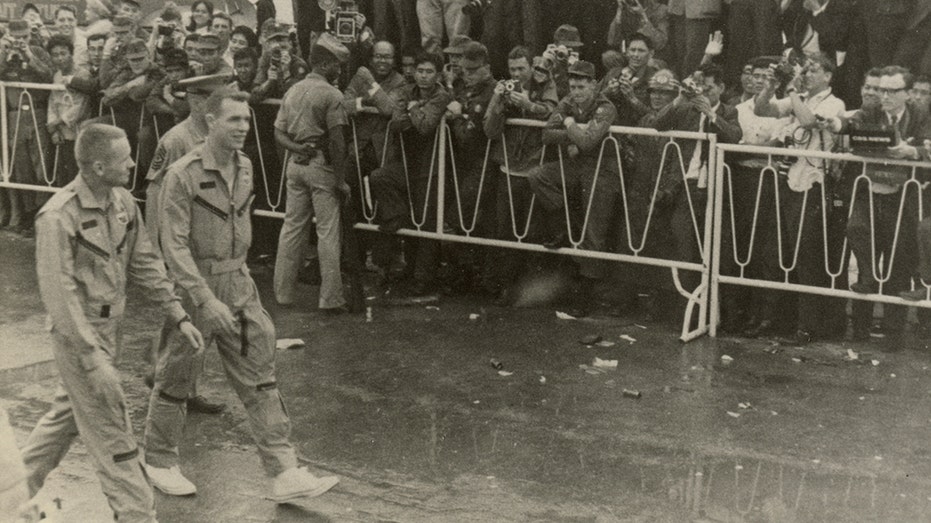
Sixty years after astronaut Neil Armstrong's near-fatal emergency during the Gemini 8 mission, previously unreleased photographs from the aftermath have been donated to the Armstrong Air & Space Museum in Wapakoneta, Ohio.
The photos were taken by Ron McQueeney, an Army veteran and professional photographer who escorted Armstrong and fellow astronaut David Scott following their emergency splashdown off Okinawa, Japan on March 16, 1966. McQueeney's widow donated the images to the museum that bears Armstrong's name.
The Gemini 8 mission encountered a life-threatening crisis shortly after achieving its primary objective of completing the first docking in space. Minutes after the successful docking, both spacecraft began tumbling uncontrollably. Armstrong and Scott separated from the other spacecraft, but the spinning worsened. Armstrong deployed the craft's thrusters to stop the rotation, using vital fuel needed for the return journey and forcing an early mission termination.
The astronauts splashed down approximately 10 hours after launch and were recovered by a U.S. Navy vessel before being transported to Naha Air Base in Japan. The photos show Armstrong and Scott on the deck of the recovery ship, waving to service members, and the Gemini 8 capsule being lifted for transport.
Dante Centuori, executive director of the Armstrong Air and Space Museum, noted the astronauts' smiles in the photographs, which he said demonstrated their professionalism. Science historian Robert Poole suggested the expressions reflected relief at surviving the dangerous mission.
Armstrong's calm response during the Gemini 8 emergency later factored into his selection as commander of Apollo 11. The newly acquired photographs will help the museum provide a more complete account of the mission to visitors, complementing the Gemini 8 capsule already on display.